

Sleep Apnea Treatment
More adults are choosing orthodontic treatment than ever before. It’s never too late to achieve the healthy, confident smile you’ve always wanted.
Breathe Better. Sleep Better. Live Better.
At Quest Orthodontics, led by the esteemed Dr. Arjun Patel, we understand that sleep apnea is far more than just snoring; it’s a serious health condition that can profoundly impact your daily life and long-term well-being. Our patient-first approach focuses on identifying and treating the root causes of sleep-disordered breathing, helping you achieve restful sleep and a healthier future. We are dedicated to providing advanced, airway-focused orthodontic solutions to our communities in Sandy Springs and Decatur, ensuring every patient receives personalized, compassionate care.
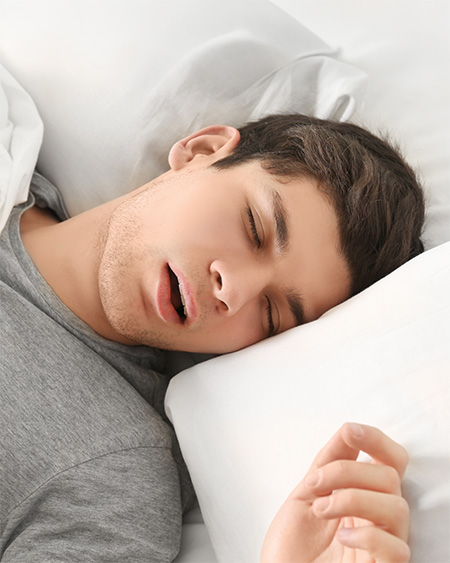

Signs and Symptoms of a Sleep-Disordered Child
These symptoms could be clues that your child’s airway is compromised.
- Snoring or heavy breathing during sleep
- Restless sleep or frequent waking
- Night terrors and bedwetting beyond early childhood
- Daytime fatigue or hyperactivity
- Persistent Mouth breathing
- High V-shaped palate
- Receding lower jaw; retrusive chin
- Scalloping on tongue edges
- Severe malocclusion
- Dark circles under the eyes ("allergic black eyes")
- Constant nasal congestion and/or runny nose
- Forward head and neck posture
- Frequent earaches and tonsilitis
- Poor weight and failure to thrive
What To Look For During Sleep
Is the child quiet?
Sleeping soundly, mouth closed, no breathing sounds, and no teeth grinding (Bruxism)
Is the child dry?
Lips together, no open-mouth or drool on the pillow, no night sweats
Is the child still?
Sleeping comfortably with little movement, and no restless tossing and turning or sleep walking
What is Proper Tongue Posture?
Proper tongue posture means the entire tongue rests gently against the roof of the mouth (the palate)
when you’re not talking or eating.
It should be:
· Lips closed
· Tongue sealed to the palate, especially the middle and back
· Breathing through the nose
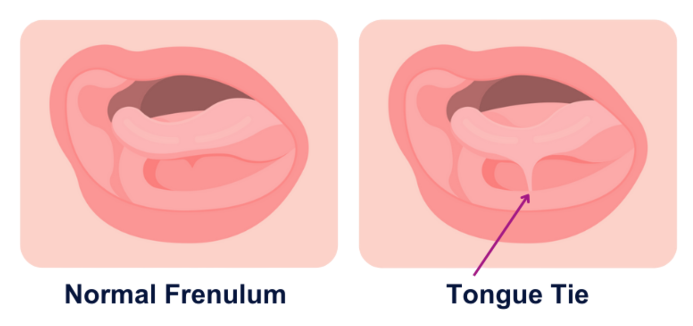
How Tongue Posture Affects the Airway & Breathing
Supports Nasal Breathing
· A tongue that rests on the palate naturally encourages nasal breathing by helping keep the
mouth closed.
· Nasal breathing is healthier than mouth breathing—it warms, filters, and humidifies air, and
supports nitric oxide production (which helps oxygen delivery).
Shapes the Upper Jaw and Palate
· The tongue is a natural “expander” of the upper jaw.
· When it rests on the palate, it stimulates proper growth of the upper jaw (maxilla) outward and
forward.
· A well-developed maxilla = wider airway space behind the nose and throat.
Prevents Narrow, High Palates
· Without tongue pressure, the palate may grow high and narrow, which restricts the nasal
airway and contributes to mouth breathing.
· Narrow palates are often linked with crowded teeth and underdeveloped midfaces.
Improves Tongue Position During Sleep
· A low tongue posture (resting in the bottom of the mouth) falls backward during sleep, which
can block the throat and restrict airflow, increasing the risk of snoring or obstructive sleep
apnea.
· A well-positioned tongue stays forward and up, keeping the airway more open.
Long-Term Benefits of Good Tongue Posture
· Better oxygen flow during the day and night
· Improved facial development (especially jawline and cheekbones)
· Reduced risk of sleep-disordered breathing
· Healthier bite alignment and less need for major orthodontic or surgical correction later
What Are Tonsils and Adenoids?
Tonsils are two lymph nodes located at the back of the throat.
Adenoids are a patch of lymphatic tissue located higher up, behind the nose, where you can’t see them.
They help fight infections—but in many kids, they become chronically enlarged, especially due to allergies, frequent illnesses, and even due to a narrow palate and mouth breathing.
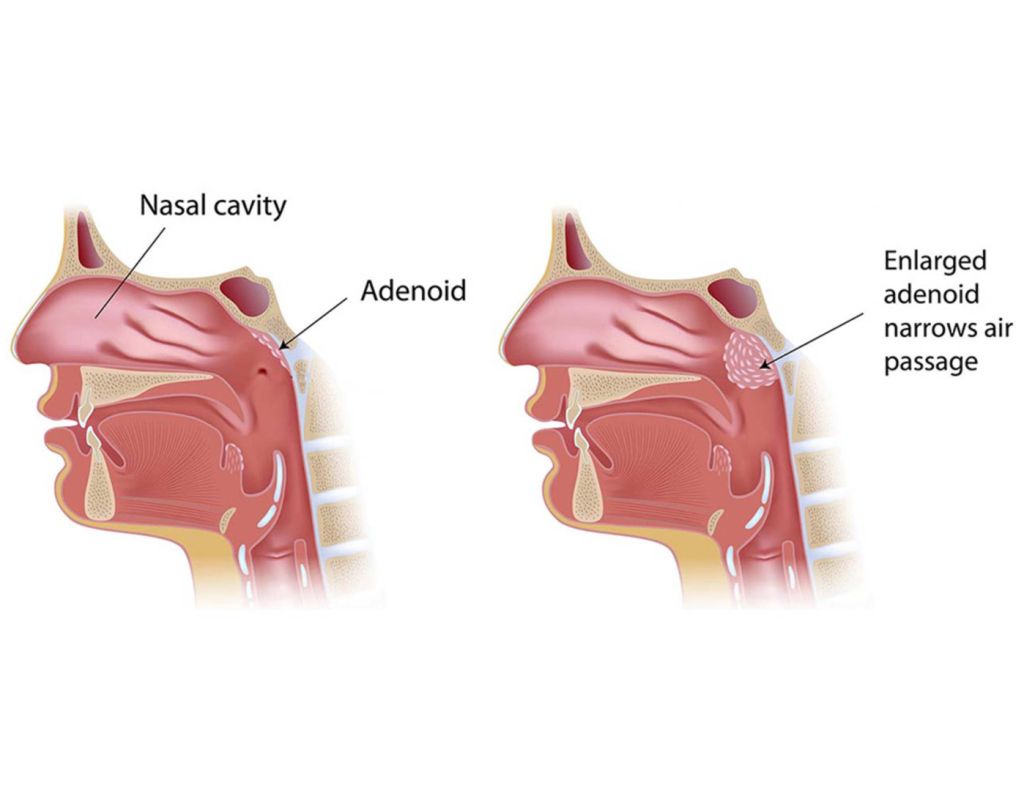
How Do Enlarged Tonsils & Adenoids Affect Breathing?
Airway Obstruction
Large tonsils can block the back of the throat, and enlarged adenoids can block the nasal passages, making it harder to breathe—especially during sleep.
Mouth Breathing
If the nose is blocked by adenoids, kids may breathe through the mouth by default, which: Dries the mouth and airway Contributes to poor tongue posture Interferes with facial and jaw development (narrow, high vaulted palate)
Interrupted Sleep & Sleep Apnea
Blocked airways can cause: Snoring Pauses in breathing (apnea) Restless sleep Nighttime awakenings
Common Symptoms
Recognizing the symptoms of sleep apnea is the first step toward seeking effective treatment. While some symptoms are noticeable to the individual, others are often reported by a partner. If you experience any of the following, we encourage you to schedule a consultation with Dr. Patel:
Loud Snoring
Often the most noticeable symptom, loud and persistent snoring, especially when punctuated by gasps or silences, is a primary indicator of an obstructed airway and is frequently reported by a sleeping partner.
Gasping or Choking During Sleep
Waking up suddenly with a sensation of choking, gasping for air, or shortness of breath is a clear sign that your breathing has been interrupted during sleep, causing your body to jolt awake to resume respiration.
Daytime Fatigue
Despite seemingly getting a full night's sleep, individuals with sleep apnea often experience excessive daytime sleepiness, profound fatigue, and a constant feeling of being unrested, due to the fragmented and non-restorative nature of their sleep.
Morning Headaches
Waking up with a dull headache, particularly in the temples or forehead, is a common symptom. This is often attributed to reduced oxygen levels in the blood during sleep, which can lead to changes in blood vessel dilation in the brain.
Difficulty Concentrating
The chronic sleep deprivation and oxygen deprivation associated with sleep apnea can significantly impair cognitive function, leading to difficulties with focus, concentration, memory, and overall mental clarity throughout the day.
Restless Sleep
Frequent tossing and turning, restless leg movements, or waking up multiple times throughout the night without a clear reason are indicators of disturbed sleep patterns, as the body struggles to maintain consistent breathing.
How we Tackle Sleep Apnea Cases
ENT Evaluation
An ear, nose & throat specialist can assess the size of your child’s tonsils and adenoids, especially if sleep-disordered breathing is suspected.
Sleep Study
In some cases, a simple sleep study (polysomnography) can help confirm sleep apnea or breathing issues.
Surgical Removal (Tonsillectomy & Adenoidectomy)
If the tissues are significantly blocking the airway, surgical removal may be recommended—often with dramatic improvements in sleep, breathing, and behavior.
Orthodontic Collaboration
Orthodontic treatments like maxillary expansion can help improve nasal airflow and reduce the impact of enlarged adenoids.
Orthodontic Treatment Options for Sleep Apnea
Quest Orthodontics offers a range of advanced, non-surgical orthodontic treatments specifically designed to address sleep apnea and improve airway function. Dr. Patel will work closely with you to determine the most effective solution for your individual needs.
Custom Oral Appliances
These comfortable, custom-fitted devices are worn discreetly during sleep, similar to a sports mouthguard. They are expertly designed to gently reposition your lower jaw slightly forward, which helps to keep your airway open and prevent it from collapsing. This non-invasive solution is highly effective for many patients, offering a comfortable alternative to CPAP machines.
Airway-Focused Orthodontics
Our comprehensive treatment plans are developed with a primary focus on optimizing your airway health. This involves a thorough assessment of your craniofacial anatomy and a strategic approach to orthodontic treatment that not only aligns your teeth but also enhances the structural integrity of your airway, promoting unobstructed breathing and improved sleep quality.
MARPE Palatal Expansion
MARPE (Minimally Invasive Rapid Palatal Expansion) is an innovative, minimally invasive procedure designed to widen the upper jaw. By expanding the palate, this technique directly increases the volume of the nasal cavity and the pharyngeal airway, significantly improving nasal breathing and reducing the likelihood of airway obstruction. It's a powerful tool for creating more space and facilitating healthier breathing patterns.
Bite Optimization
Correcting malocclusions (bad bites) is fundamental to our airway-focused approach. An improper bite can contribute to a restricted airway by influencing jaw position and tongue space. Through precise orthodontic adjustments, Dr. Patel optimizes your bite alignment, which in turn can alleviate airway restriction and improve overall oral function, leading to better breathing and sleep.
Non-Invasive Therapy
Quest Orthodontics specializes in providing effective, non-invasive therapies for sleep apnea. These treatments offer compelling alternatives to more aggressive interventions like surgery or the continuous positive airway pressure (CPAP) machine, which many patients find uncomfortable. Our solutions are designed to be comfortable, convenient, and highly effective in managing your sleep apnea symptoms.