
A patient came in last month at 41 with crowded lower front teeth. She had braces at 14, wore her retainer through high school, lost it in college, and did not think about her teeth again for 20 years.
She assumed something had gone wrong. Nothing had. Her teeth did what teeth do when the retainer stops. The treatment worked. The retention ended.
That distinction matters, because it changes what you should expect, what you should pay for, and what to do if you are the person noticing the shift right now.
Teeth are not set in concrete
A tooth is not welded to the jaw. It is suspended in the periodontal ligament, a small cushion of tissue that allows it to move during chewing and to adapt to force. That mobility is what makes orthodontics possible in the first place. It is also why teeth keep moving after treatment.
Three processes drive the change. The periodontal ligament remodels under load. The jawbone changes with age. And the forces of chewing, grinding, and clenching continue for decades. None of those processes stop when the braces come off.
This is not a failure of the orthodontist or the patient. It is the biology of a living tissue. The question is not whether teeth will move. It is how much, how fast, and whether you want to control it.
What the long-term research actually shows
The most cited long-term data comes from studies using Little's irregularity index, which measures how far the lower front teeth are from an ideal arch. A score under 3.5 mm is considered clinically acceptable.
In cases treated with premolar extractions, only about 30% of patients still had acceptable lower incisor alignment 10 years after retention ended. By 20 years, that figure fell to about 10%. In nonextraction cases without permanent retention, a separate sample found about 36% acceptable at 10 years.
Those numbers sound alarming, and they are the reason orthodontists talk about retention so much. But they need context. The same research shows that untreated adults also develop crowding over time, just more slowly. Some of what looks like relapse is simply the normal aging of a dental arch.
The practical read is this: without some form of long-term retention, a meaningful share of patients will see their lower front teeth crowd again. With consistent retainer wear, the odds improve substantially. Fixed retainers, in particular, have been shown to hold alignment for decades in patients who maintain them.
The three reasons teeth move after treatment
Retainer lapse. This is the largest and most fixable factor. Most people stop wearing their retainer in their twenties, often because it breaks, gets lost, or feels tight and uncomfortable. The teeth then drift back toward their original positions.
Growth and aging. The jaw continues to change in the twenties and thirties. The lower jaw can rotate forward slightly, the dental arch can norrow, and the front teeth can crowd even in people who never had braces.
Function. Grinding, clenching, gum disease, and untreated bite problems all move teeth over time. A patient with a heavy clench can relapse even with good retainer wear, because the forces are large and constant.
That last factor is why retention is not only about a piece of plastic. If you clench, a nightguard may matter as much as the retainer. If you have active gum disease, the teeth can migrate regardless of orthodontic history.
The three types of retainer, and who they fit
Removable Hawley retainer. A plastic base with a metal wire across the front teeth. It is durable, adjustable, and lets the bite settle. It is visible when worn, and speech takes a few days to adapt.
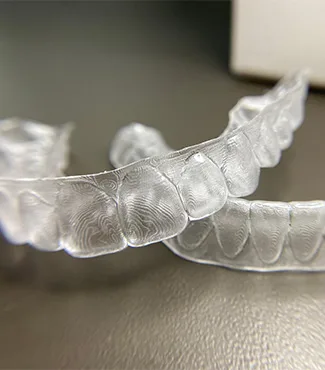
Removable clear or Essic retainer. A clear tray made from a scan of your finished teeth. It is nearly invisible and comfortable, and it is the type most patients prefer for nightly wear. It wears out faster than a Hawley and needs replacement more often.
Fixed lingual retainer. A thin wire bonded to the back of the front teeth. It is invisible and works continuously, which makes it the most reliable option for the lower front teeth. It requires careful hygiene because plaque collects around the bond, and it can detach, which needs a repair visit.
Many orthodontists combine them: a fixed wire on the lower front teeth plus a removable retainer at night. That combination covers the most relapse-prone area while giving the bite a night-time hold.
How long you actually wear them
The old advice was full-time wear for a few months, then nightly forever. That is still a reasonable default, but the details matter.
In the first three to six months after debond, the periodontal ligament is still remodeling, and full-time wear, except for eating and brushing, gives the teeth time to stabilize. After that, nightly wear is usually enough for life. Some patients with severe initial crowding or a history of relapse are advised to wear part-time during the day as well.
A common mistake is to stop wearing the retainer when it feels tight. That tightness is a signal that the teeth have moved and the retainer is doing its job. If it is painful or does not seat, call the office rather than forcing it or abandoning it.
What a retainer really costs
Replacement retainers usually cost a few hundred dollars per arch, depending on the type and the lab. A fixed retainer repair is usually less than a new removable retainer, but it requires a visit.
The number that matters more than the replacement fee is the policy around it. Some practices charge a replacement fee plus a records fee plus a visit fee. Others bundle it. Ask before you finish treatment, not after you lose the retainer on a trip.
"Free retainers for life" is a marketing phrase that rarely means free. It usually means the first set is included, and replacements are discounted or capped. That can still be a good deal, but you should know which one you are buying.
What the Lifetime Smile Guarantee actually covers
At Quest, every completed treatment includes one set of retainers. The Lifetime Smile Guarantee goes further: replacement retainers at a clear, predictable cost for as long as you remain a patient, retainer check-ins at either office or through remote monitoring, and access to the team for questions.
It is not free replacement for life, and we do not describe it that way. It is a commitment that retainer care will not become a surprise invoice, and that the relationship does not end at debond.
The guarantee applies to Invisalign, LightForce braces, Qlear aligners, and traditional braces. Minor corrections may be addressed within the program. Significant relapse may need a separate treatment plan, which is a clinical reality no guarantee can erase.
If your teeth have already shifted
The first step is an assessment, not a decision. We scan, compare the current position with what we can reconstruct of the original, and tell you which category you are in.
Mild shift. A new retainer or a short aligner course may be enough. This is common and usually straightforward.
Moderate crowding. A limited aligner treatment, such as Qlear, can often realign the front teeth without a full comprehensive case. The fee is lower because the problem is smaller.
Significant relapse with bite change. Some patients need comprehensive treatment again, especially if the bite has shifted or teeth have worn unevenly. That is a bigger decision, and it deserves a full plan rather than a quick fix.
Waiting usually makes the problem more expensive. Teeth that have shifted a little are easier to guide back than teeth that have shifted for a decade and worn into a new bite.
Retainers after Invisalign versus braces
The biology is the same. Aligners move teeth through the same ligament, and the teeth are just as likely to shift afterward. The difference is that aligner patients often end with a clear retainer, which is comfortable but wears faster than a Hawley.
Some Invisalign cases finish with a fixed lingual wire plus a clear night retainer. That is often the most durable combination for the lower front teeth. Ask which type your plan includes and what replacement will cost.
Moving away, traveling, and the long-distance problem
Retention is a lifelong issue, and people move. A retainer that fit in Decatur may break in another state.
Quest manages this with remote monitoring through Grin, which lets patients submit photos from home, and with a process for mailed retainers or referral to a trusted provider in a new area. It is not the same as an in-person check, but it is far better than letting the retainer sit in a drawer.
If you are planning a move, tell the office before you go. It is easier to plan the handoff than to solve it from another time zone.
Local care for former patients
Both Quest offices see former patients who need retainers, repairs, or a reassessment. The Sandy Springs office on Roswell Road is convenient for Buckhead, Dunwoody, Vinings, and East Cobb. The Decatur office on Church Street is a few blocks from Decatur Square and the MARTA station, which helps patients working downtown or at Emory.
You do not need to have been a patient here to be assessed. A second opinion on shifting teeth is a routine visit, and it is usually cheaper than waiting until the bite changes.
Cleaning a retainer without ruining it
A retainer is a piece of plastic and wire that sits in a wet mouth every night. It picks up odor and stains if it is only rinsed.
For a removable retainer, brush it daily with a soft brush and clear soap or a retainer cleaner. Skip toothpaste, which is abrasing and dulls the plastic. Skip hot water, which can warp it. A denture tablet in cool water once a week is enough for most patients; daily soaking is not necessary and can degrade some materials.
For a fixed lingual retainer, the wire is the easy part. The bond is where plaque collects. A floss threader or interdental brush around each bonded tooth is the routine, and a water flosser helps. At each check-in, we look for loose bonds and gum inflammation around the wire.
Store a removable retainer in its case, not in a napkin or a pocket. Most replacements we see are not worn-out retainers. They are lost or broken ones.
If a retainer cracks, do not wear it. A cracked tray can seat unevenly and push teeth in the wrong direction. Call the office, bring the pieces, and use the previous retainer only if it still fits without force.
Frequently asked questions
Why do my teeth shift after braces even though I wore my retainer?
Some shift is normal aging, especially in the lower front teeth. Retainer wear reduces it but does not eliminate it. Grinding, gum disease, and jaw growth can also move teeth despite good wear.
Do I have to wear a retainer forever?
Most orthodontists recommend nightly wear indefinitely, with occasional checks. The first months after treatment usually need fuller wear. After that, nightly wear is enough for most patients, but individual cases vary.
Is a fixed retainer better than a removable one?
Fixed retainers are more reliable for the lower front teeth because they work continuously. Removable retainers are easier to clean and let the bite settle. Many patients do best with both.
How much does a replacement retainer cost?
Usually a few hundred dollars per arch, depending on the type. The bigger variable is the practice's replacement policy. Ask what is included and what is charged before you finish treatment.
Can shifted teeth be straighted again without full braces?
Often yes. Mild to moderate crowding can be treated with a short aligner course or a new retainer. Significant relapse with bite changes may need comprehensive treatment.
Does insurance pay for retainers?
Some plans include retainers within the orthodontic benefit, and some exclude them as a separate appliance. Replacement retainers are often not covered. Check the plan language before you assume.
What should I do if my retainer breaks?
Call the office rather than waiting. Wear the previous retainer if it still fits, avoid forcing a broken piece, and book a repair or replacement visit. Teeth can move quickly in the first weeks after a break.
About the author: Dr. Arjun Patel, DMD is a board-certified orthodontist and the owner of Quest Orthodontics in Sandy Springs and Decatur, Georgia. He is a Top 1% Invisalign Blue Diamond provider, an Atlanta Magazine Top Dentist from 2019 through 2026, and a graduate of the University of Georgia and the Medical College of Georgia.